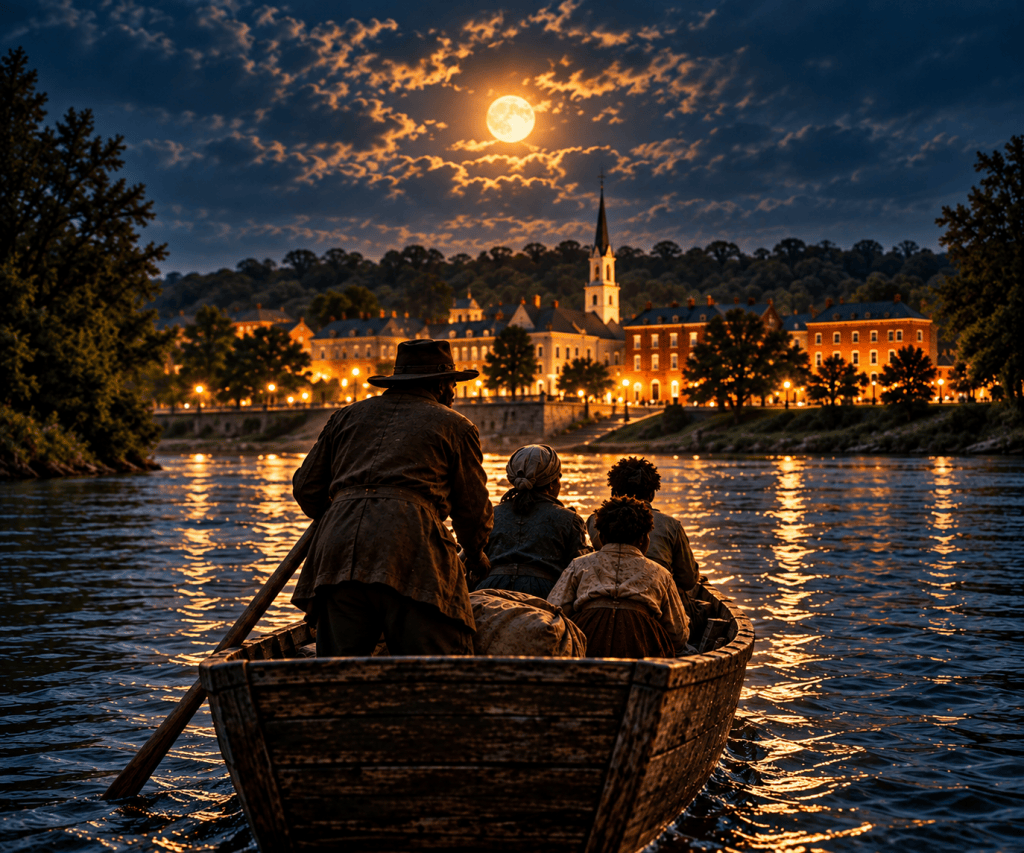
In Madison, the Ohio River helped build a city.
Steamboats carried goods. Merchants built fortunes. And the river connected Indiana to a growing nation.
But before the Civil War, that same water meant something very different to someone standing on the Kentucky shore.
On one side was a state where slavery was legal.
On the other was Indiana—a free state.
The distance across the river wasn’t far.
But crossing it could change the course of a life.
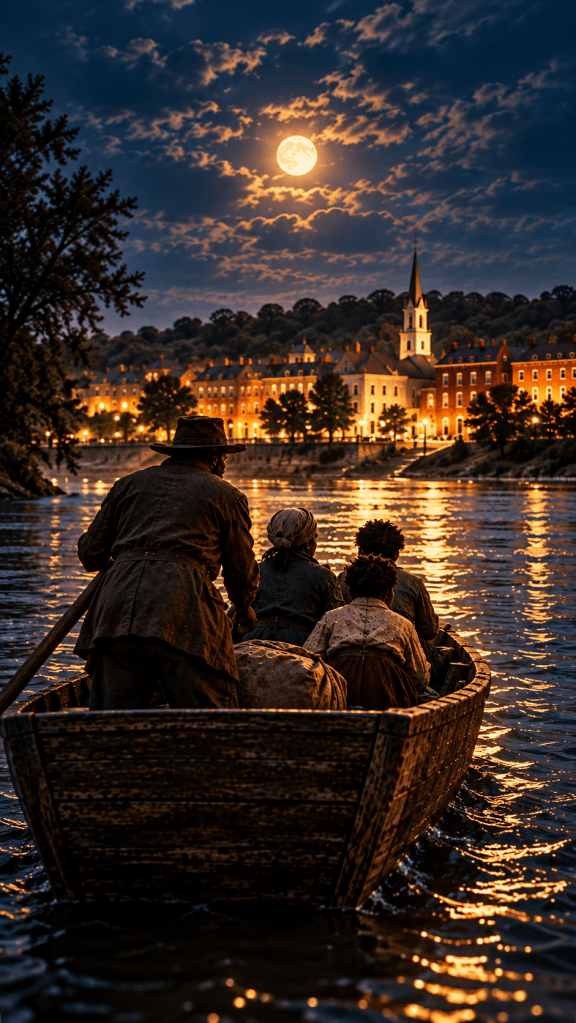
And reaching Madison didn’t mean the danger was over.
Slave catchers could follow. Federal law could reach across state lines. Helping a freedom seeker could put your own safety, property and freedom at risk.
Yet in Madison, people did help.
Black residents, abolitionists and others became part of a network that moved freedom seekers away from the river and farther north.
Some of their names are still known.
Chapman Harris. Elijah Anderson. William J. Anderson. George DeBaptiste.
And one Madison neighborhood became especially important to the story.
Georgetown.
This isn’t a story about a mysterious railroad hidden beneath the streets.
It’s a story about people.
People who crossed a river.
People who opened their doors.
People who provided transportation.
People who risked their own security to help someone else pursue freedom.
This is Madison, Indiana — The Road to Freedom.
The River
To understand Madison’s role in the Underground Railroad, you have to start with geography.
Madison sits on the north bank of the Ohio River.
Directly across that water is Kentucky.
Before the Civil War, Kentucky permitted slavery. Indiana prohibited it.
For an enslaved person escaping north, crossing the Ohio River could therefore mean entering a free state.
But it was never as simple as reaching the opposite shore.
Federal fugitive-slave laws allowed freedom seekers to be pursued and captured even after entering free states.
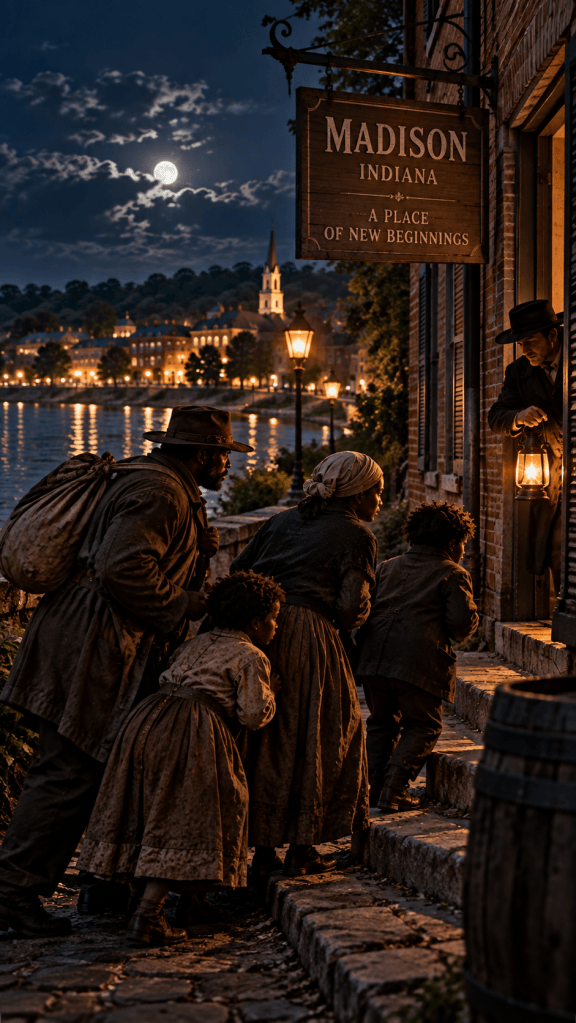
Madison nevertheless became an important crossing area.
And only about five blocks from the river was a neighborhood where free Black residents created a community that became the center of Madison’s Underground Railroad activity.
Georgetown.
Georgetown
Georgetown wasn’t a secret hideout somewhere outside Madison.
It was part of Madison itself.
African Americans were living in the neighborhood by the 1830s. Over time, homes, churches and a Black community developed there.
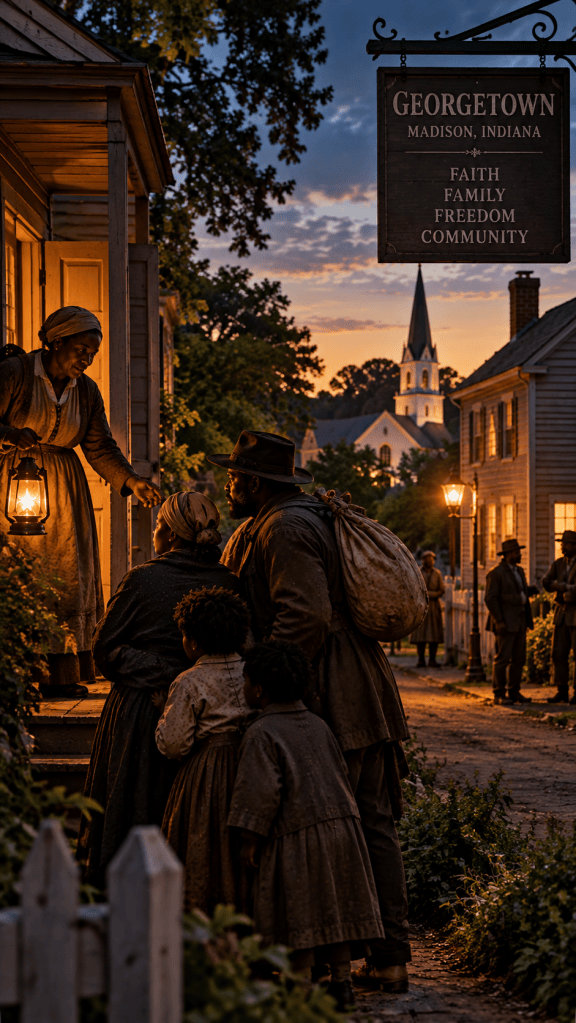
And some members of that community became deeply involved in helping freedom seekers.
Homes could provide shelter.
People could provide food, information and transportation.
Conductors could help someone move away from the river toward another connection farther north.
There wasn’t one official road.
There weren’t railroad tracks or timetables.
The Underground Railroad was a network of people—and secrecy was essential to its survival.
Georgetown became one of Madison’s centers of that activity.
It also became a target for people determined to stop it.
Some of the people involved were threatened.
Some were attacked.
Some eventually left Madison.
But several names became closely connected with the city’s Underground Railroad story.
One of them lived a few miles east of town.
Chapman Harris — The Signal at Eagle Hollow
Chapman Harris was born free in Virginia in 1802 and came to the Madison area by about 1839.
He became one of Jefferson County’s best-known Underground Railroad workers.
His family had property at Eagle Hollow, east of Madison along the Ohio River.
And according to accounts preserved after the Civil War, Harris developed an extraordinary signaling system.
An iron plate or anvil was placed in a sycamore tree near his home.
When Harris or his sons were preparing to cross the Ohio in a skiff, they would strike the iron.
The sound carried across the water.
For freedom seekers waiting on the Kentucky side, that sound could mean help was coming.
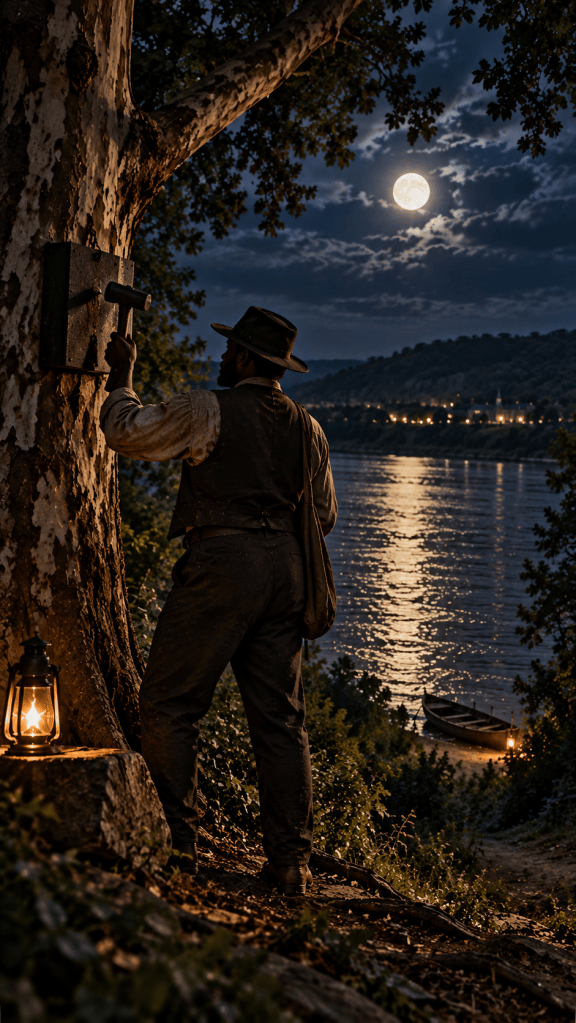
Harris didn’t simply wait for people to reach Indiana.
Accounts describe him crossing the river himself to assist them.
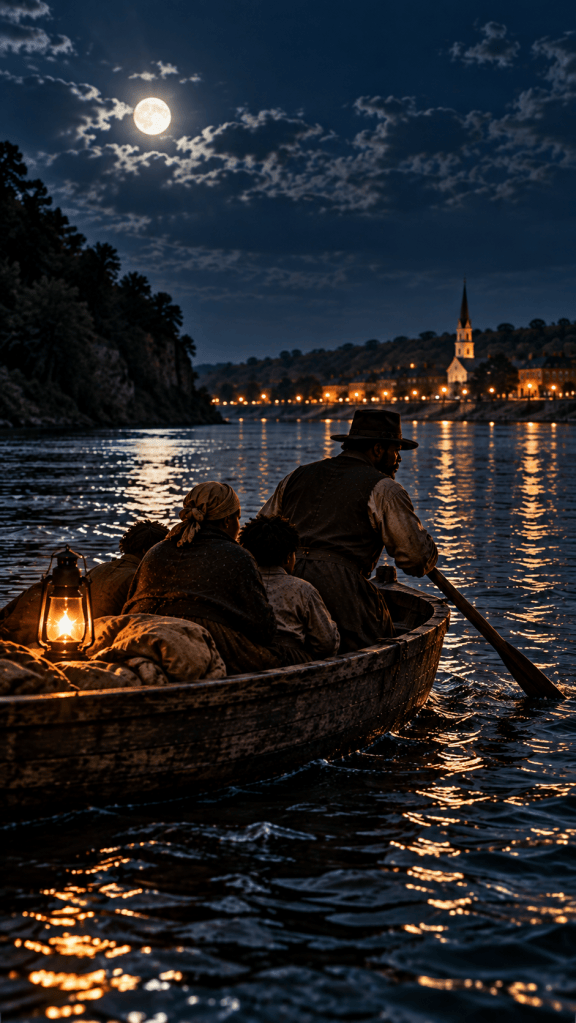
That work brought danger directly to his doorstep.
Slave catchers searched around his property, and surviving accounts describe Harris as fiercely resisting attempts to recapture people who had reached his home.
The historical record surrounding Harris also reminds us that Underground Railroad history was complicated. He and Elijah Anderson were convicted in connection with the violent beating of a Black man accused of revealing the location of a freedom seeker.
These weren’t characters in a simple legend.
They were real people operating in an extraordinarily dangerous world.
And Harris wasn’t working alone.
Another Madison conductor developed a very different way of moving people toward freedom.
His name was Elijah Anderson.
Elijah Anderson — Hiding in Plain Sight
Elijah Anderson arrived in Madison in 1837.
He operated a blacksmith shop near Walnut and Third Streets, and his home still stands in the Georgetown neighborhood.
Anderson became known as an aggressive Underground Railroad conductor.
Historical accounts describe him as light-skinned enough that he could sometimes pose as an enslaver traveling with enslaved people.
That allowed him to use something we don’t normally associate with the Underground Railroad:
Public transportation.
Steamboats.
Trains.
The same transportation system moving ordinary passengers could sometimes be used to move freedom seekers north.
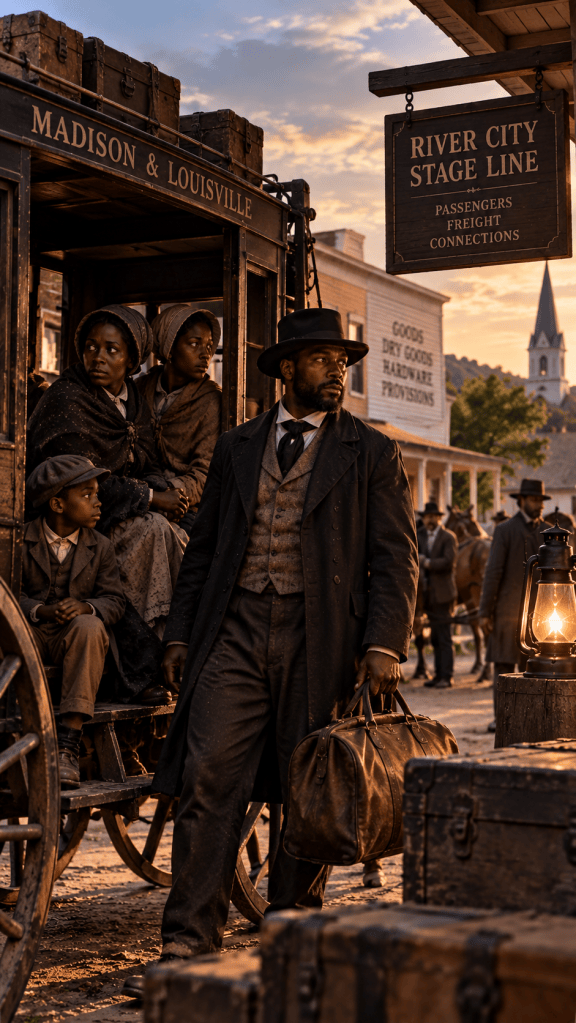
Anderson later claimed to have helped hundreds of people while operating from Madison and many more after moving to Lawrenceburg. Exact totals are difficult to establish because Underground Railroad activity was deliberately secretive.
But Anderson’s activities were well known enough to make him a target.
Kentucky authorities eventually captured him.
In 1856, he was arrested in connection with helping freedom seekers, convicted under Kentucky law and sentenced to prison.
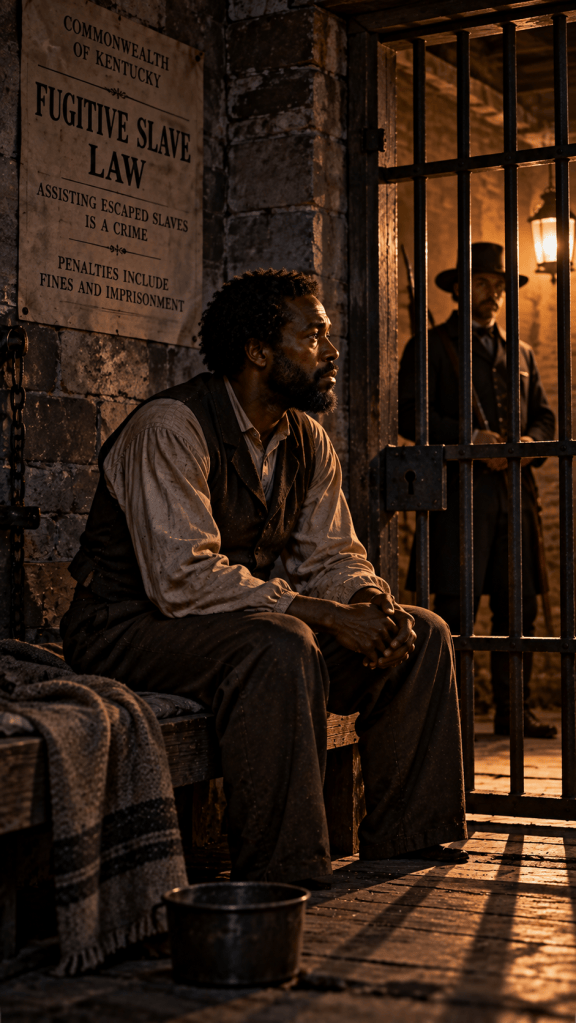
On March 4, 1861—the day he was due to be released—Anderson was found dead in his cell at the Kentucky State Penitentiary. The surviving record establishes his death there, although later descriptions of the circumstances have varied.
The man who had spent years helping others move toward freedom never returned to his Underground Railroad work.
But the network didn’t depend upon one person.
That was its strength.
Someone could provide shelter.
Someone else could provide information.
And someone else could provide transportation.
William J. Anderson — The Wagons Were Ready
William J. Anderson was another important member of Madison’s Black community.
A minister associated with Madison’s African Methodist Episcopal congregation, Anderson built the AME church building in Georgetown and rented it to the congregation, which also sponsored a school in the basement.
And he possessed something especially valuable to people trying to move away from the Ohio River.
Transportation.
In his 1857 life narrative, Anderson recalled that his two wagons, carriage and five horses were available to freedom seekers.
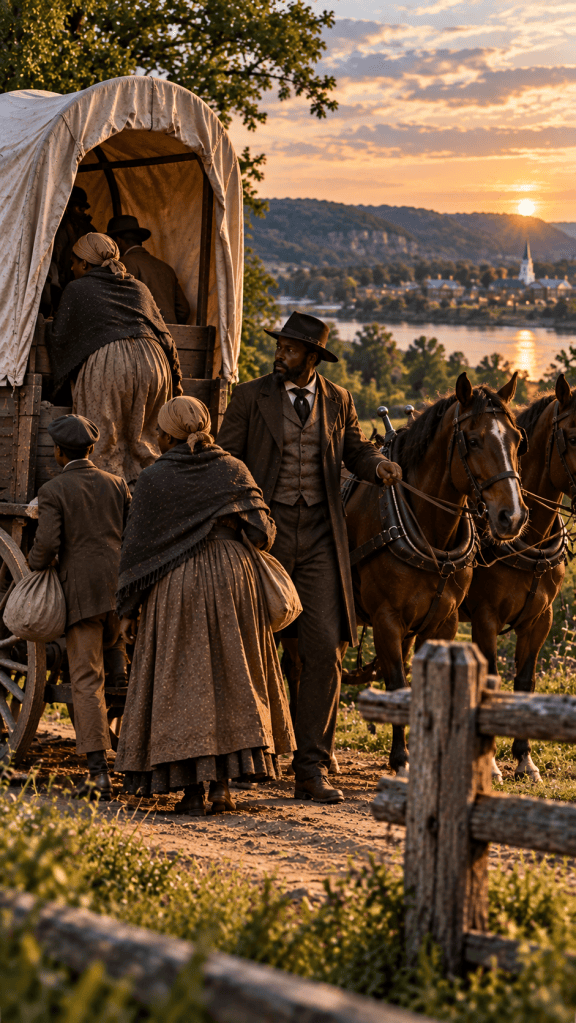
Think about what that could mean.
Someone arriving from Kentucky might be exhausted, frightened and unfamiliar with the roads ahead.
Traveling on foot could expose them.
A wagon could put miles between a freedom seeker and the river.
But helping carried consequences.
Anderson was arrested in 1856 aboard the steamer Telegraph over allegations that he had helped enslaved people escape from Kentucky. He was acquitted, but the legal costs contributed to the loss of his property.
The Underground Railroad needed more than courageous conductors.
It needed ordinary things.
Houses.
Food.
Horses.
Wagons.
Information.
And people willing to make those things available.
Among Madison’s network was another man whose story would eventually stretch from the Ohio River all the way to the White House.
George DeBaptiste — From Madison to the White House
George DeBaptiste was born free in Virginia around 1815 and moved to Madison around 1837 or 1838.
He worked as a barber and aboard vessels traveling the Ohio River.
He also became involved in Madison’s Underground Railroad network.
Then, in 1840, DeBaptiste took on an extraordinary second role.
He became valet to presidential candidate William Henry Harrison.
When Harrison won the election, DeBaptiste accompanied him to Washington and continued serving him in the White House.
The man involved in helping freedom seekers along the Ohio River was now working inside the Executive Mansion.
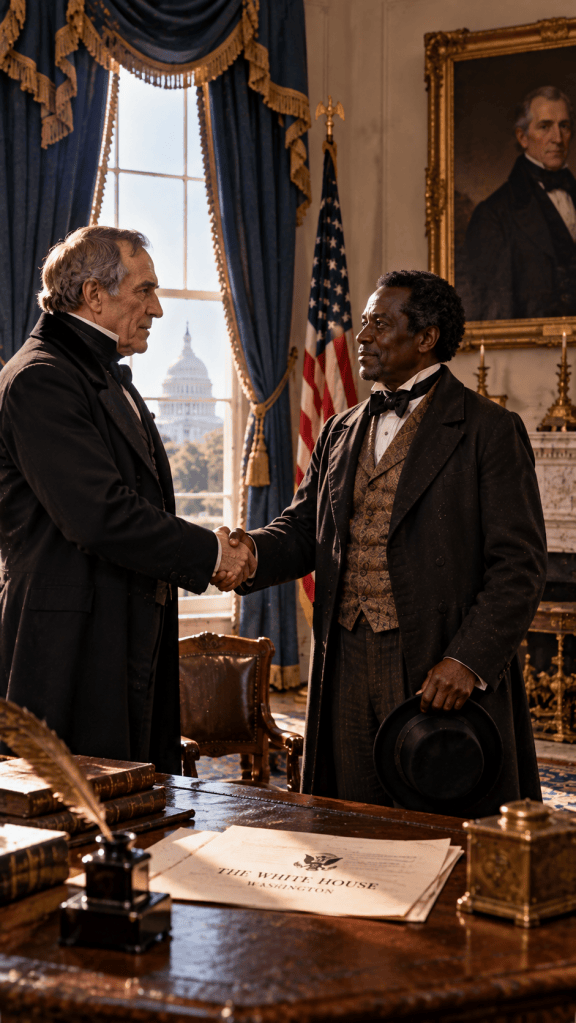
Harrison’s presidency lasted only about a month.
After the president died, DeBaptiste returned to Madison.
And he resumed his abolitionist work.
His barber shop became associated with Underground Railroad activity, and accounts describe him helping freedom seekers cross from Kentucky and move toward their next connection.
One recollection from abolitionist John H. Tibbets gives us a glimpse of how that network operated.
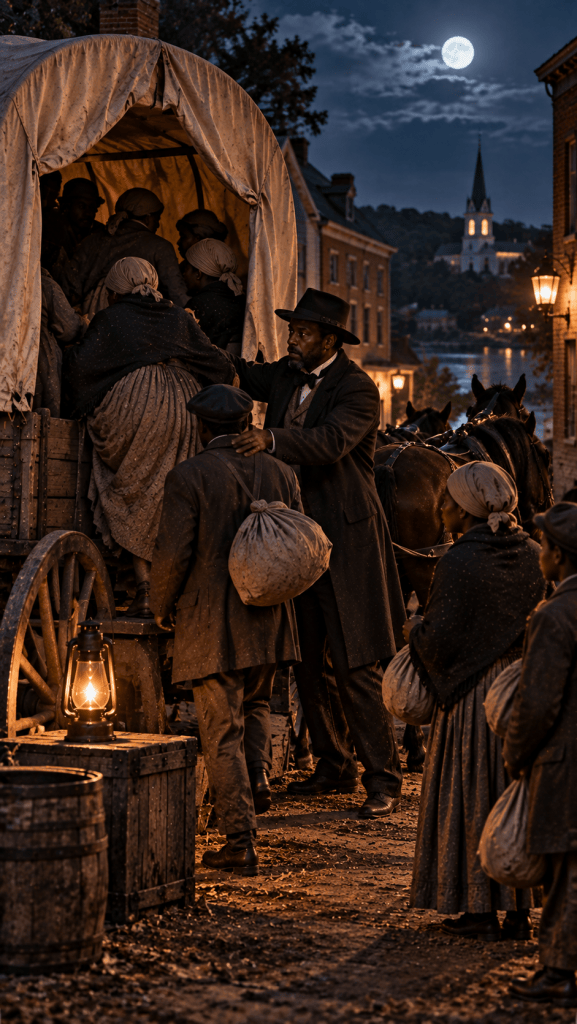
DeBaptiste sent word that a group of ten freedom seekers would be leaving Kentucky.
Tibbets prepared transportation.
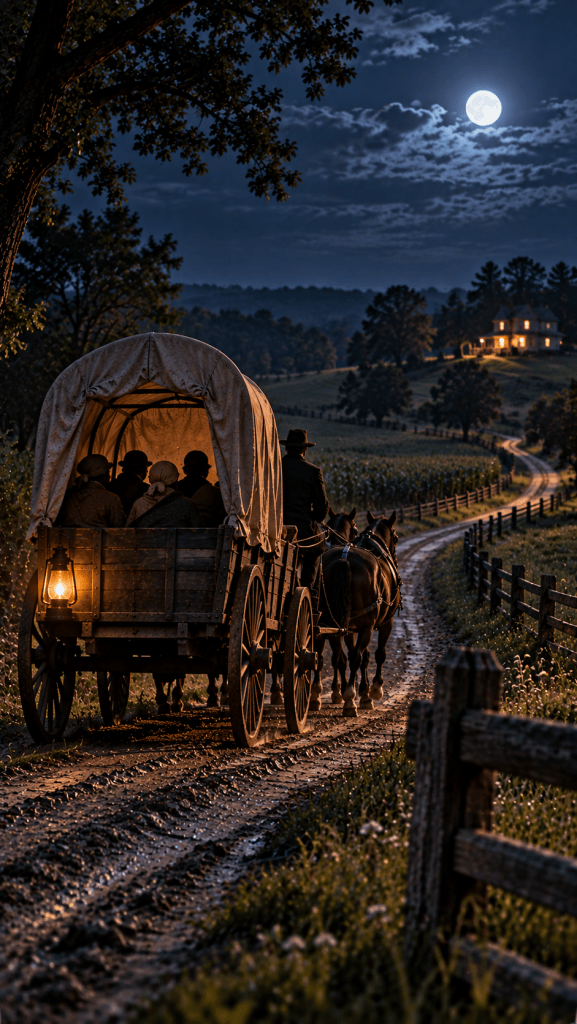
After dark, the group was placed inside a covered wagon.
The curtains came down.
And they headed north.
No railroad station.
No passenger list.
No official route.
Just people inside a wagon and a chain of others who knew where they needed to go next.
Eventually, DeBaptiste’s work made Madison increasingly dangerous for him.
Amid mob violence and threats, he moved to Detroit in 1846.
But he didn’t leave the Underground Railroad behind.
He simply moved farther north in the same struggle.
Detroit sat across another river from another destination.
Canada.
DeBaptiste continued assisting freedom seekers there, eventually using his experience with boats to help people cross the Detroit River beyond the reach of American fugitive-slave law.
Madison had been one link in a much longer chain.
The Road North
Crossing the Ohio River wasn’t necessarily the destination.
It was another step.
From Madison, freedom seekers needed connections that could carry them farther north.
Different people used different routes.
Conditions changed.
Safe locations could become dangerous.
Slave catchers could appear.
Sometimes people traveled on foot.
Sometimes in wagons.
Sometimes aboard trains or steamboats.
And because secrecy was essential, surviving documentation can never give us a complete passenger list or a perfect map.
That uncertainty is part of understanding the Underground Railroad.
It wasn’t one road.
It was a network.
Madison’s network also crossed racial lines. Black conductors and community members worked alongside white abolitionists and other antislavery allies in Jefferson County and beyond.
But moving farther north didn’t automatically make a freedom seeker legally safe.
And in 1850, the danger became even greater.
Freedom Wasn’t Safe — The Fugitive Slave Act
In 1850, Congress enacted a stronger federal Fugitive Slave Law.
Indiana prohibited slavery.
But federal law still allowed escaped enslaved people to be pursued in free states.
People accused of being fugitives faced a legal system heavily weighted against them, while people who knowingly assisted escapes could face criminal penalties.
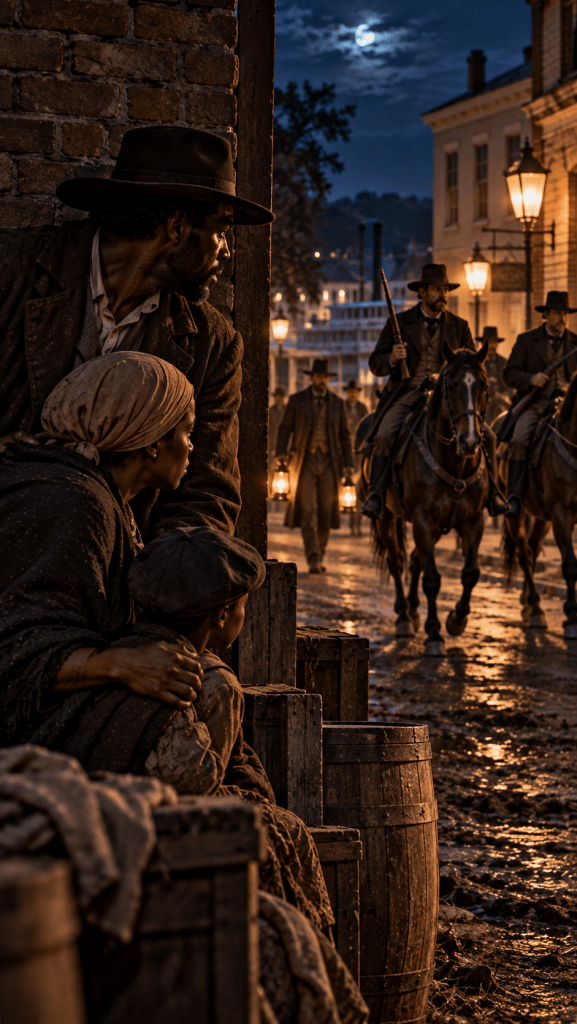
Madison’s Underground Railroad network was therefore operating under increasing pressure.
Slave hunters knew the city’s reputation.
Violence and intimidation had already targeted members of its Black community.
Georgetown itself became a focal point for Kentucky mobs attempting to disrupt Underground Railroad activity.
Some conductors left Madison.
Others continued.
The network adapted because it had to.
And for freedom seekers, the reality was stark:
Indiana might prohibit slavery.
But Indiana did not guarantee safety.
A Free State — But Not an Equal One
There is another part of this story that can’t be ignored.
Calling Indiana a “free state” does not mean Black residents lived as equal citizens.
In 1851, Indiana adopted a new constitution containing Article XIII, which attempted to prohibit additional Black and mixed-race people from entering and settling in the state.
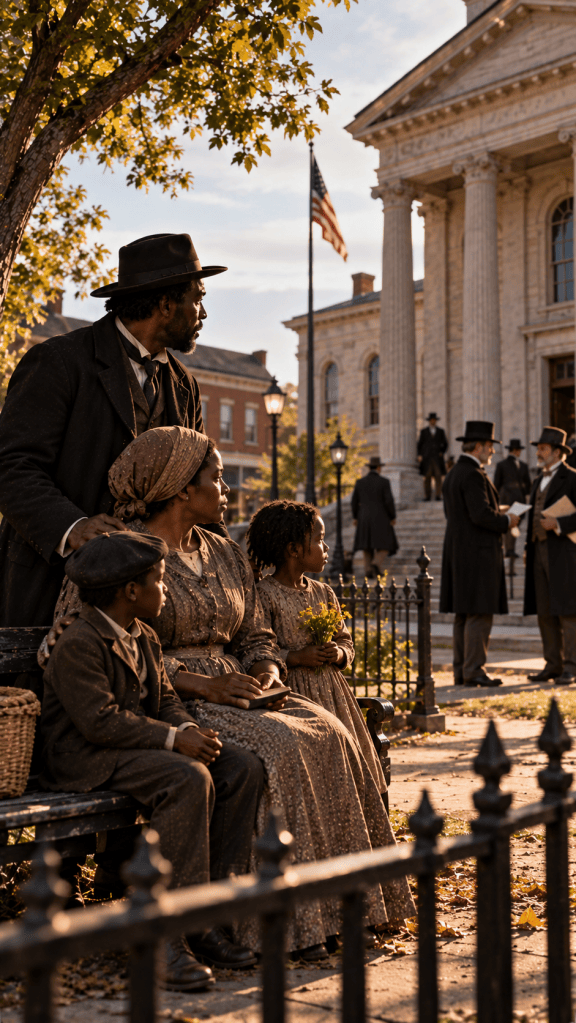
So at roughly the same time people were risking their lives helping freedom seekers move through Indiana—
Indiana was attempting to keep additional Black people from settling there.
The contradiction is important.
Madison’s Black residents had built homes.
Established businesses.
Created churches.
Raised families.
And some had risked their lives, property and livelihoods helping other people escape slavery.
Yet the state around them continued imposing racial restrictions.
Madison’s Black population declined from 298 in 1850 to 247 in 1860, a change historians connect in part to the Fugitive Slave Law and Indiana’s 1851 constitutional restrictions.
Some people left.
Others stayed.
And what they built in Georgetown matters enormously today.
What Remains
Nearly two centuries later, you can still walk through Georgetown.
And that’s one of the most remarkable parts of Madison’s Underground Railroad story.
Some of the physical landscape survived.
About 64 percent of the Georgetown neighborhood dating from the Underground Railroad period remains today.
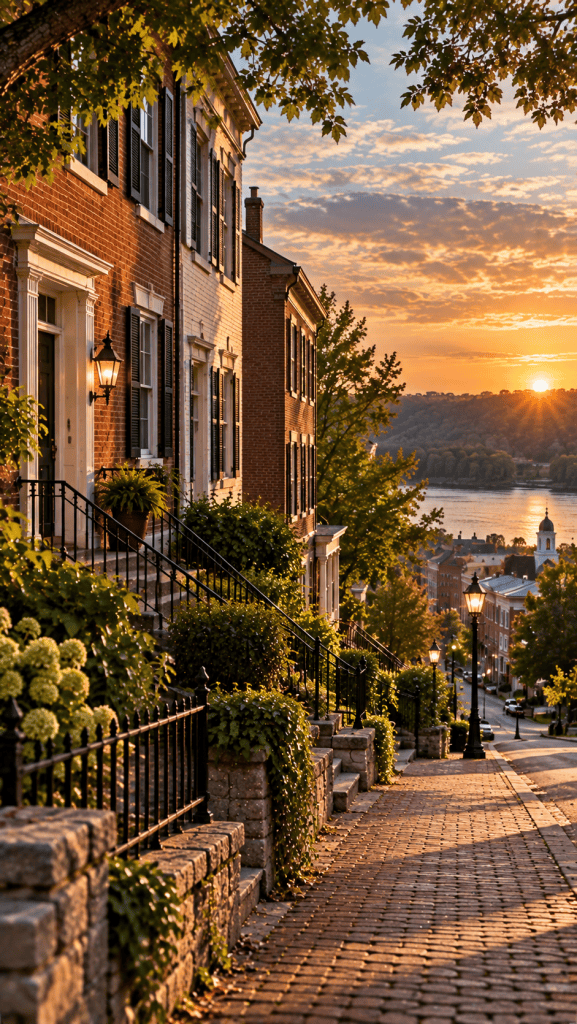
Homes remain.
Churches remain.
Streets remain.
The Ohio River is still only blocks away.
The surviving buildings include places associated with people involved in Madison’s Underground Railroad network, including Elijah Anderson and William J. Anderson.
They’re not grand monuments built to commemorate famous historical figures.
Many are ordinary buildings.
And that’s precisely why they matter.
The Underground Railroad depended upon people living ordinary lives who were willing to do extraordinary things.
A blacksmith.
A barber.
A minister.
A farmer.
A wagon owner.
Families willing to provide shelter.
People willing to keep information secret.
People willing to guide a stranger toward another person they trusted.
And people willing to face the consequences if they were caught.
In Madison, their story survives not only because someone eventually wrote parts of it down.
Some of the places survived with it.
The River Looks Different From This Side
Today, crossing the Ohio River into Madison takes only a few minutes.
You drive across a bridge.
The river passes beneath you.
And before long, you’re surrounded by the historic streets and buildings that make Madison such a remarkable place.
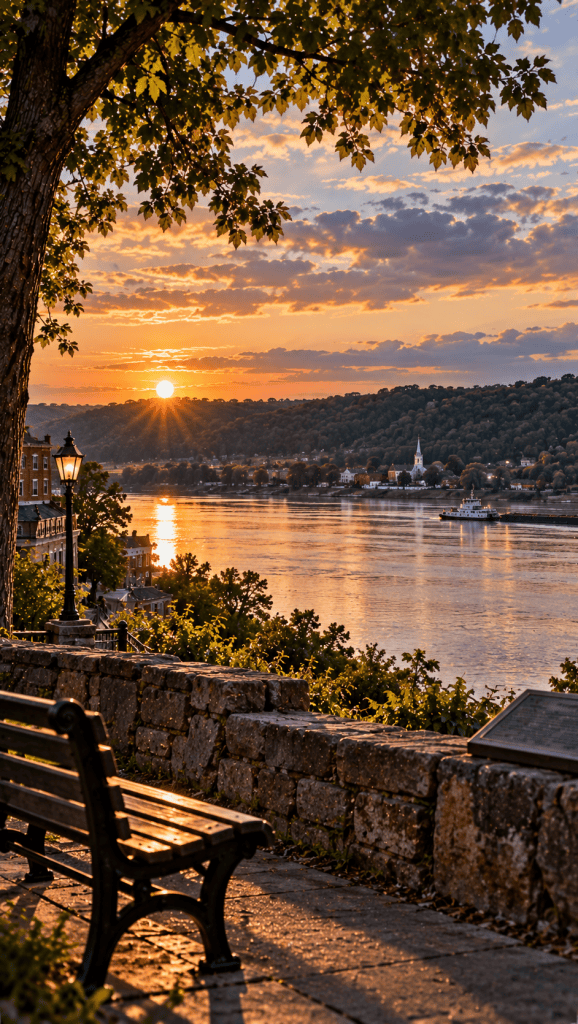
But there was a time when crossing this river could be one of the most dangerous journeys of a person’s life.
For someone escaping slavery in Kentucky, reaching the Indiana shoreline represented possibility.
But not certainty.
Slave catchers could follow.
Federal law could send a freedom seeker back.
And even Indiana—a state where slavery was prohibited—denied Black Americans many of the rights enjoyed by white residents.
Yet people crossed anyway.
And waiting on the Indiana side were people willing to help.
Chapman Harris crossed the river in a skiff.
William Anderson made transportation available.
Elijah Anderson found ways to move people through transportation networks.
George DeBaptiste helped connect freedom seekers with people who could carry them farther north.
And around them were other names—
some remembered,
some barely preserved in the historical record,
and undoubtedly others whose names were never recorded.
That’s important.
The Underground Railroad wasn’t an organization with headquarters, membership cards or passenger lists.
Secrecy was part of how it survived.
Which means we’ll probably never know every person who passed through Madison.
We’ll never know every door that opened.
Every wagon that traveled after dark.
Every meal quietly shared.
Or every moment when someone had to decide whether helping another human being was worth the danger.
What we do know is that Madison became one of the places where those decisions were made.
Georgetown Is Still Here
And remarkably, you can still walk through the neighborhood where part of this happened.
Georgetown didn’t disappear beneath a highway or vanish completely beneath modern development.
Much of its historic landscape survived.
Stand there today and the Ohio River is only a few blocks away.
That distance matters.
Because when we talk about the Underground Railroad, it’s easy for the story to become abstract.
Maps.
Dates.
Laws.
Famous names.
But stand in Georgetown and look toward the river, and the geography becomes real.
Kentucky is right there.
The physical distance between the shores isn’t enormous.
Yet before the Civil War, crossing that water meant entering a state with a different legal relationship to slavery.
And somewhere along this stretch of river, freedom seekers arrived hoping that someone on the Indiana side would help them take the next step.
Some people did.
The Road to Freedom
We often describe the Underground Railroad as a road to freedom.
But there wasn’t one road.
For someone passing through Madison, the journey might include a boat across the Ohio.
A house in Georgetown.
A wagon traveling into the hills.
Another home.
Another town.
Another stranger willing to help.
And for some, eventually, another river hundreds of miles away—with Canada on the opposite shore.
Each connection could move someone farther from the place where another person claimed ownership over their life.
That’s the story hidden behind some of Madison’s beautiful old streets.
In Part 1, we discovered how the Ohio River helped build Madison.
In this story, we discovered something very different.
For some people, that same river was something they had to cross while escaping slavery.
Madison preserved pieces of both histories.
The prosperous river town.
And the Black community whose members risked their safety, property and freedom helping other people pursue theirs.
One story shouldn’t replace the other.
Together, they help us understand the town that was actually here.
Some Roads Mean More Than Others
So the next time you find yourself in Madison, don’t stop at the storefronts.
Walk a little farther.
Find Georgetown.
Look toward the Ohio River.
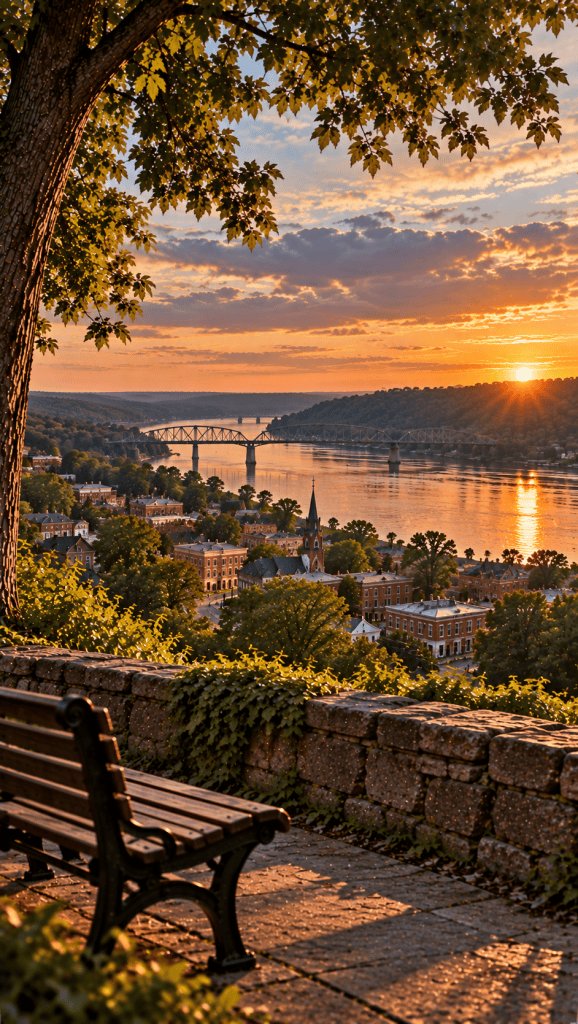
And remember that for some of the people who crossed that water nearly two centuries ago—
Madison wasn’t simply another town.
It was the next step.
Not the end of the journey.
Not guaranteed safety.
But another road toward something they had been denied.
Freedom.
These are the stories hiding along roads most of us travel without ever knowing what happened there.
You passed the town. We took the exit.
The Town You Passed
Start at the Beginning
This is Part 2 of our journey through Madison, Indiana.
In Part 1 — Madison, Indiana: The River Town That Time Didn’t Erase, we explore how the Ohio River, steamboats, Indiana’s first railroad and the extraordinary Madison Incline helped shape one of Indiana’s most important early cities.


Leave a Reply